Monday, April 30, 2012

Trotsky Revised Again


Yesterday evening (April 29, 2012), the television program Sixty Minutes has an interesting segment on the work of Dr. Nora Volkow, head of the National Institute on Drug Abuse, on the effects of drug use on the brain and on why addictions are so difficult to overcome. One of Dr. Volkow's best points, I thought, was that some addictive drugs damage the part of the brain involved in exercising will. This does raise the questions of personal freedom. If we hold that some people, such as those who engage in the use of drugs, have diminished responsibility, this also means that they have diminished control over their own actions. Who, then, can exercise control over their actions, supposedly in their interest?

The oddest part of the feature came in the portrayal of Dr. Volkow's family background. The segment identified her as one of the granddaughters of Leon Trotsky and it briefly interviewed her father, who was a child living with his Russian revolutionary grandfather when a Stalinist agent brutally murdered the grandfather in 1940. Sixty Minutes portrays Dr. Volkow and her two highly accomplished sisters as carrying on in the idealistic, humanitarian tradition of Trotsky. It even suggests that Trotsky's enmity with Stalin resulted from the former's desire to move the Soviet Union in a more "democratic" direction. While the Volkow sisters do seem like admirable people, this version of their great-grandfather is a pretty questionable revision of history.

The lionization of Trotsky owes a good deal to the contrast with the man who ordered his murder. Trotsky was an enemy of Stalin, along with Mao and Hitler one of the most vicious monsters of the twentieth century. Trotsky is also an appealing figure for intellectuals because he was highly literate and articulate. His nickname among the revolutionaries was "the pen." He was certainly no advocate of democracy, though. As architect of the Red Army during the Russian Civil War, he was ruthless. In 1921, he played a leading role in the bloody suppression of the Kronstadt Rebellion, in which sailors rose up to demand liberalization of the Bolshevik regime. Trotsky criticized Stalin "from the left," arguing for greater state control over the economy and for making the USSR more active in spreading world revolution. Even after Stalin expelled him from the Soviet Union, Trotsky continued to urge his followers to support the totalitarian Soviet state.  

If Communism was indeed, as Raymond Aron quipped, "the opium of the intellectuals," one may well wonder how much damage Dr. Volkow's great-grandfather did to the frontal lobes of those addicted to his particular brand of intoxicant. 

Sunday, April 29, 2012

Diversity Training Follies

Several bloggers have recently drawn attention to an article on the ineffectiveness of “diversity training” in Psychology Today, among them Walter Olson at “Overlawyered” and Hans Bader at OpenMarket.org.  The article, by  Peter Bregman, recounts the author’s own fruitless experiences in running diversity training and cites “… a study of 829 companies over 31 years [that] showed that diversity training  had ‘no positive effects in the workplace.’” In fact, mandatory diversity training often appears to have negative effects, and to increase expressions of prejudice.
Bregman attributes the negative effects to more than resentment against the mandate. He argues that emphasizing thinking of people in categories actually divides them.  I think he may underestimate the role of sheer anger at being forced to undergo these types of sessions. From experience, I’m also pretty sure that one of the reasons diversity training sessions lead to more accusations of prejudice and more lawsuits is that these encourage people to interpret statements as prejudicial and intensify feelings of victimization and perceptions of discrimination. But I also think there is a more fundamental reason to oppose re-education programs than mere ineffectiveness or even unintended consequences. 
While employers do have the right to set workplace rules, including rules regarding the interactions of their employees, we cannot have a free society when corporate organizations, whether governmental or private, attempt to dictate how and what individuals are permitted to think.  If efforts at thought control were successful, that would hardly be a justification of them.

Friday, April 27, 2012

A Question of Self-Interest


"Don't Tax you. Don't Tax me. Tax that man behind the tree."
- Senator Russell Long

The interest rate on student loans will jump from its present 3.4% to 6.8%, if the present low rates are not extended for a year by the beginning of July.  Unfortunately, this one year extension, if passed will cost an estimated $5.9 billion.  Dean Zerbe, writing in Forbes, has a suggestion about how to cover this cost. Instead of a tax on S corporations that would tax small businesses, Zerbe proposes eliminating the provision in the tax code that allows college professors and administrators to receive free tuition or tuition reduction tax-free from their institutions.

Try as I might, I find that I'm unable to put self-interest aside in considering Zerbe's suggestion. Although I was a partner in an S corporation at one point in the past,  I don't foresee being in this situation again in the near future. On the other hand, I have enjoyed extremely generous tuition waivers for my children. Without those, I would have been in the interesting situation of teaching in a college where I could not afford to send my own children. In fact, my university's sticker price is high enough that I probably would not have been able to pay the taxes on a taxable tuition waiver. Yes, my children could have gone to public universities and, no, I can't think of a reason I'm more deserving of a tuition tax break than someone who works at Wal-Mart or Exxon, to use examples from the Zerbe article. On the other hand, I'm pretty sure I wouldn't have volunteered for as many committees and extra work in an institution that my own children could not attend. 

Mr. Zerbe is also a little misleading when he identifies the tax break as applying to "college professors, administrators, and college presidents." It really applies to any college employee who gets a tuition waiver, including the secretaries and maintenance workers. The article reminded me of a woman I knew who worked at my college, in a staff position. A few years ago, her daughter, then a beginning undergraduate, announced that she wanted to try another school. "I've been working here for all of these years," her mother answered, "at this low-paying, futureless job in order to get free tuition for you and now you don't want to go here? You'll go to school here and you'll finish your degree or else!"  The daughter finished her degree here. I would venture to guess that many of those on our staff are working for the tuition waiver more than the wages.  They would be even less able to pay the taxes on the benefit than I am.  It also costs the university far less to let their children occupy empty seats in the classrooms than to raise wages.

Which would be worse, placing a greater tax burden on small businesses or on college employees (more broadly defined than faculty and administrators)? If this means worse for the American economy, I'll have to put the question to an economist. If it means worse for me, the answer is pretty obvious. My own preference would be to take neither of these options and to keep college interest rates low by dramatically reducing the number available and making them contingent on academic merit and likelihood of repayment. Bringing down the number of subsidies might put us on the road to stabilizing the sky-rocketing costs of college. I'd also like to see us simplify our tax code and end the used-car sales approach to pricing real tuition rates for everyone.  

Wednesday, April 25, 2012

The Rebirth of Hype

The sad death of a young man in Florida continues to receive ever more hallucinatory responses. Here, at my university, in a city where young black men slaughter each other on a daily basis, the extraordinarily atypical case of a black teenager killed by a white Hispanic ,in a city far to our east ,became the topic of a “discussion” extravagantly entitled “Trayvon Martin and the Rebirth of a Nation: Gender & Race in Today’s Media.”  
This event was apparently not a discussion at all, but a series of sermons presenting a single, highly questionable assertion as revealed truth. The killing in Florida, according to this assertion, was not atypical at all, but a consequence of the baseless demonization of black males in the popular media. Rapper Jasiri X set the stage for the outrage against the media and the justice system at the beginning when he “…took center stage, his words articulate and scathing, his passion palpable as he recreated his viral hit indicting the paradigmatic laxity of the justice system in addressing the case of Trayvon Martin,” according to the university publication’s account of the event. This was clearly not going to be an open-minded intellectual inquiry or a debate.
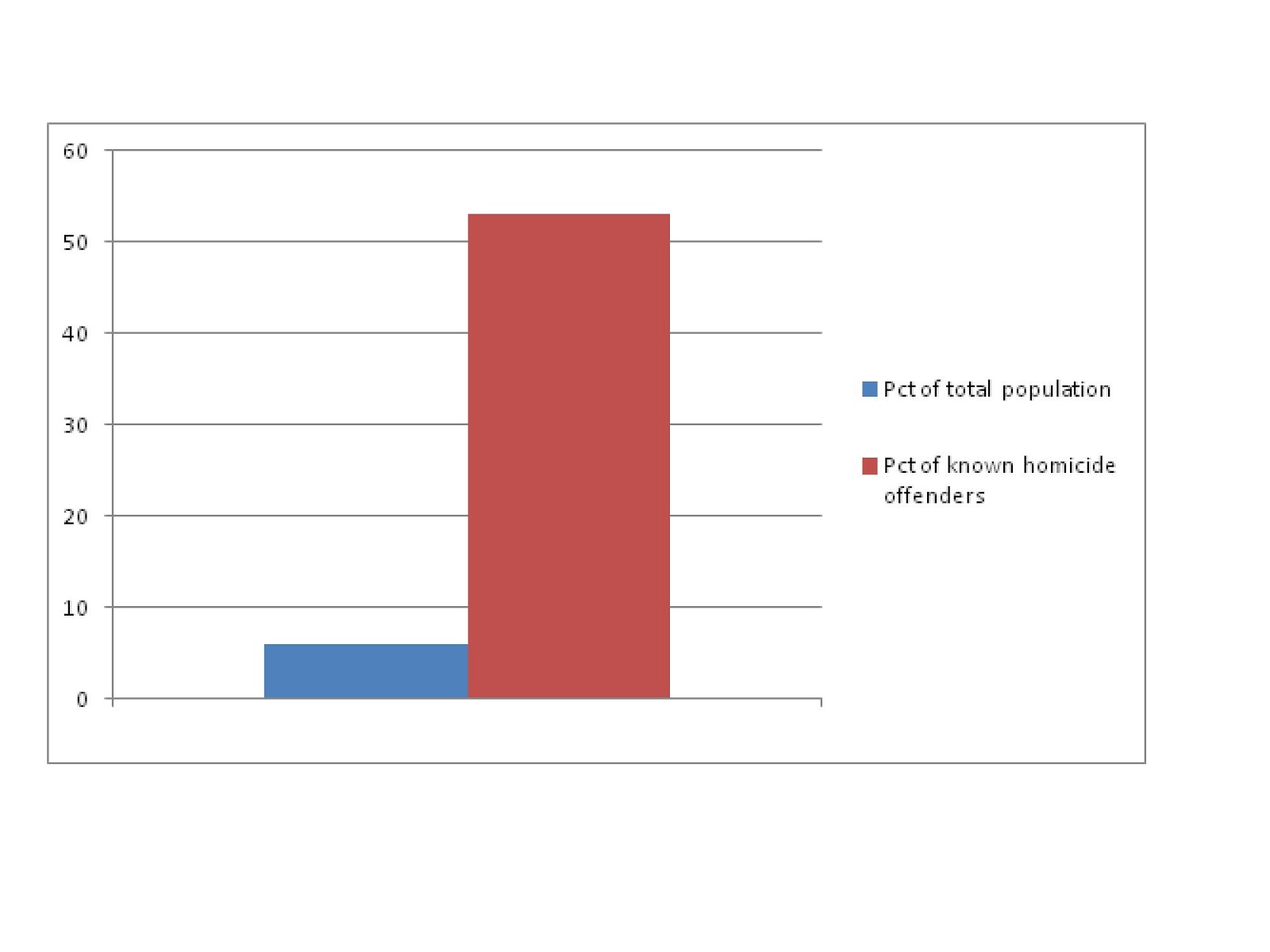
Mark Anthony Neal, professor of African and African American Studies at Duke University, and author Joan Morgan (pictured here) offered their variations on the sermon. Professor Neal complained that “there are very few depictions of black men and boys in mainstream culture… And when there are, they are almost always in a negative context, a criminal context. There is a very clear connection between this depiction of black men and boys, and how it affects policy.”  I don’t know which “mainstream culture” Professor Neal has been observing, but when I look at television and film, I see a constant and self-conscious effort to portray black Americans, men and women, as either respectable professionals or heroes struggling against oppression. The one place where I do see black men portrayed in a :”criminal context” is on the news. There is a reason for that. First, the events that make the news are usually negative by definition and the people who appear on the news are usually not members of the virtuous majority, who make up most of both sexes and all racial groups. Second, black men appear disproportionately in those media portrayals because of disproportionate crime rates. Black men, for example, are less than 6% of the total American population, but they commit more than half of all the homicides in which the offender can be identified.

Black Men as a Percent of the Total US Population and as a Percent of Known Homicide Offenders
Source, FBI, Uniform Crime Reports, 2010

I cite murders specifically because these are crimes in which the “negative context” cannot be attributed to discriminatory arrest rates of a putatively biased justice system. But if we look at arrests for other violent crimes, we see this 5.87% of the population arrested for nearly one-third of rapes, close to half of all robberies, and over a quarter of aggravated assaults and burglaries. Do we really need to wonder where the evening news gets that “criminal context?”
Black Men as a Percentage of the Total US Population and as Percentages of Those Arrested for Selected Violent Offenses
Source, FBI, Uniform Crime Reports, 2010


Author Joan Morgan followed this by observing that “we’re living in an increasingly more complicated reality, but we are not having complicated conversations about race.” Well, yes, and that’s exactly why this kind of simplistic, single-minded, delusional panel session is part of the problem. Although murders of blacks by whites are extremely uncommon, and murders of blacks by blacks occur constantly, a tragic instance of the former is offered up here as representative and "paradigmatic." In a city in a state of warfare among young men, all the panel participants agree that the biggest concern is a lax justice system. Speakers reduce the image of young black men to unfair depictions in the media, ignoring the obvious source of that image in sky-high crime rates. There are no dissenting voices in this fantasy of national rebirth. If we want "a complicated conversation about race," we'll have to look somewhere else.

Tuesday, April 24, 2012

The Federal Funding Fiasco

Immediately after Congress passed the American Reinvestment and Recovery Act of 2009, I saw colleagues in the university forming research groups to figure out what they could study to get some of the money, which was largely available through the National Science Foundation (NSF).  In designing their research, they carefully considered what the federal government would want them to investigate and they gave close attention to the social processes and consequences that the federal government defined as desirable. At the time, this struck me as disturbing because it reversed what I would normally consider the order of investigation: a researcher decides that a particular issue is important for understanding the world around us, develops a program for looking into this question, and then (if necessary) finds funding to carry out the research. But when the feds pay the piper, they call the tunes.

In today's highly subsidized world of higher education, there are no private institutions. Taxpayer money funds the tuition of the students, and it funds the research of the professors. One difficulty with this is that it tends to drive a wedge between the two areas of subsidization. The professors are going to be chasing after that grant money and designing their research to get the money, not doing research that they can present in the classroom.  The most successful are often those who spend the least time teaching and the most time seeking external funding.  A second difficulty is that it spreads a subtle politicization of the faculty, as professors seek to shape their careers according to the wishes of the funding bureaucracies, not according to the search for truth.

I was reminded of these thoughts when I read Heather MacDonald's article in City Journal, entitled "Granting Absurdity." MacDonald points out that grants are not really "free money." Grants are dollars that federal agencies draw from localities around the U.S. and then redistribute as the agencies see fit, siphoning off substantial sums for bureaucratic support. "Federal grant-making," MacDonald observes, "is the hook that Washington uses to gain control over local institutions, whether public or private. Universities and schools are in thrall to the Education Department’s absurd reading of Title IX law, for example, because of their consumption of federal (a.k.a. recycled local) dollars."

Sunday, April 22, 2012

The Castle at Santorini

Image of a skull, the ruined castle sat there
on the hillside. Sockets of empty windows
showed the road their aged, sightless stare.

We climbed the stairs, bent beneath our packs
as if we were two thieves, hauling our loads
of goods and guilt slung across our backs.

A living village spilled from still, dead stones;
mocking children and goats traced our tracks
through the bone-white dust around their squalid homes.

But when we reached the top, they left us there.
Inside the skull, we hung from the hill alone,
alone but for the sun nailed in the air,

whose beams crossed through the cracks
            everywhere.

Saturday, April 21, 2012

History of Psychoanalysis

For good or ill, psychoanalysis was one of the most influential intellectual movements of the last century.. From its beginnings in the late nineteenth century, though, it has also been one of the most controversial and its future is in doubt. Many academic psychologists today reject psychoanalysis as a pseudoscience, and contemporary practicing psychiatrists generally rely more on other therapeutic approaches.

In Secrets of the Soul: A Social and Cultural History of Psychoanalysis (2004), Eli Zaretsky argues that the origins of psychoanalytic thinking and its changes can be traced to a society being shaped by economic developments. He divides the book into three parts, intended to reflect the forms of the economy and their resulting social styles. The first part, “Charismatic Origins: The Crumbling of the Victorian Family System,” considers Sigmund Freud’s founding of psychoanalysis during the years 1890 to 1914.  Zaretksy argues that these were also the early years of “the second industrial revolution.” During the first industrial revolution, beginning a little over a century earlier, Western economies had moved from a basis in agriculture to a basis in factory production. The second industrial revolution involved the development of mass-produced goods and, later, a consumer culture.

The early years of the second industrial revolution began to dissolve the controls of family life over individuals, according to the author. Zaretsky describes late nineteenth and early twentieth century Vienna as a new center of cultural life focused on the private self.  The idea of the personal unconscious and a new fascination with individual sexuality emerged in response to concern with the private self. Freud’s theories expressed these concerns, and Freud became the charismatic founder of a new movement.  This part of Zaretsky’s argument reminded me of the quip of Karl Kraus that “psychoanalysis is the disease it purports to cure.” To my mind, this raises the question of whether psychoanalysis may be seen as a narcissistic self-obsession resulting from the disintegration of social institutions, much as Philip Rieff argued in The Triumph of the Therapeutic.

As a new movement , psychoanalysis faced the dilemma of whether it would become absorbed into the mainstream of medical practice, or remain on the margins of intellectual life as a sect following Freud. By 1910, with Freud’s split from Carl Jung and Alfred Adler, psychoanalysis was largely excluded from official acceptance and became chiefly a mostly Jewish sect, according to Zaretsky. As I read this, I was reminded that the breakaways from psychoanalysis have also been accused of setting up their own tribal sects, most notably by Richard Noll in his books on the Aryan cult of Carl Jung.

The second part, “Fordism, Freudianism, and the Threefold Promise of Modernity,” considers psychoanalysis from World War I to World War II. The cases of “shell shock” and battlefield neuroses of the first World War gave a push to the attempts to understand psychological problems. These cases also inspired Freud to adapt his theories by developing his ideas on the death drive or death instinct in human behavior. The spread of Freudian approaches, though, accompanied a new era in industrial history.

The term “Fordism” refers to Henry Ford, whose factories mass-produced automobiles, transforming these machines from luxury items for the wealthy to widely marketed goods for consumers in general. Ford-type mass production involved two, contradictory sides. On the one hand, it required standardization. People had to show up at jobs and function as efficient workers. On the other hand, the consumer economy encouraged individualism. Freudian analysis promised to meet both requirements, since it seemed to be a means of curing inconvenient forms of nonconformity through therapy, and it also catered to the self examination of individual patients. 

While Freudian psychoanalysis responded to the market economy, it also flirted with the major industrial competitor to the market system. Several of Freud’s associates were socialists, and for a time the psychoanalytic movement had loose ties to the Bolsheviks in Russia. Leon Trotsky, one of the major figures of the Russian Revolution who was forced into exile by Joseph Stalin in the late 1920's, was interested in psychoanalytic theory. Apparently, Freudian ideas appealed to Trotsky as a promising means of controlling human minds and  redesigning society. In 1918, during the brief period of Communist control in Hungary, the psychoanalysts held a congress in Budapest on the invitation of the ruthless Hungarian leader Bela Kun.

During the years following the first World War, psychoanalysis also became tied to another movement for social change, the women’s movement. By 1930, women had become many of the most dominant figures in psychoanalysis, originally an almost exclusively male activity. Anna Freud, the daughter of Sigmund, became a leading light and her father’s most obvious successor. Karen Horney, a psychoanalyst who became a feminist critic of Freud, developed ideas about women’s sexuality and the psychological development of women. Melanie Klein, who was to become Anna Freud’s great rival, emphasized the role of the mother in the lives of children, a sharp contrast to Sigmund Freud’s emphasis on the influence of the father. This rise of women in the psychoanalytic movement, in Zaretsky’s view, was another consequence of the evolving economy of the second industrial revolution. During and after World War I, women began to participate more actively in employment outside the household and in public life. The family became a place where goods were consumed, rather than produced, and women were central figures in the new, consumption-oriented family. The turn toward the mother in psychoanalysis, then, mirrored events in the surrounding culture.

World War II marked the end of Zaretsky’s second period. With the rise of Naziism and Fascism, psychoanalysis was driven out of its Central European birthplace. In united Germany and Austria, a distorted “non-Jewish” version of psychoanalysis rose under the leadership of a Matthias Göring, a cousin of Nazi leader Hermann Göring. The exile of Freud and his disciples encouraged the spread of psychoanalysis throughout the world, and the movement put down especially important roots in England and America. While Sigmund Freud tried to keep his theories separate from politics, many of the exiled psychoanalysts, as opponents of Naziism, drew closer to left-wing politics. These included the Austrian Wilhelm Reich and members of the Institute for Social Research in Frankfurt, Germany, such as Erich Fromm, Max Horkheimer, and Theodor Adorno.

Zaretsky identifies the period after World War II as the third development in the history of psychoanalysis. This era, particularly from the late 1940s through the 1970s, was the time of the welfare state in Britain, the United States, and Western Europe. The role of the mother became even greater in this post-war welfare psychoanalysis. In the United States, psychoanalysis became institutionalized as a technique for social control, but some theorists also began to discover radical possibilities in psychoanalytic teachings.  The tumultuous 1960s mad echarismatic, radical Freudians such as Norman O. Brown and Herbert Marcuse prominent figures for the utopian New Left.  The society of mass consumption also encouraged the proliferation of therapies, and psychoanalysis began to break down into many approaches to therapy and to merge with other theories and philosophies. In France, Jacques Lacan became something of a cult figure by linking psychoanalysis to structuralism and fashionable ideas about the nature of language.

While psychoanalytic theories addressed many of the concerns of the new second half of the twentieth century, the psychoanalysts themselves had begun to become outdated. The culture of the 1960s seemed narcissistic, over concerned with the self, and the new therapies that had arisen out of psychoanalysis began to replace it. In the 1960s, fewer individuals applied for membership in the American Psychoanalytic Association, and the average age of members rose rapidly.

By the 1970s, psychoanalysis had broken down into two main projects that had little in common with each other. It was a medical technique that aimed at providing therapy for mental and emotional disorders. It was also, though, a humanistic theory for the study of culture. Both of these projects faced challenges as the twentieth century ended. Neuroscience and  psychopharmacology began to replace psychoanalysis as medical approaches. Many mainstream psychology departments in universities ignored Freudian ideas completely. Humanistic psychoanalysis came under assault from cultural studies, feminist theory, and other new trends in academic interpretation. There were indications of renewed interest in psychoanalysis, but there were also many who proclaimed that the movement had been an intellectual dead end.

Secrets of the Soul is an ambitious effort to look at the psychoanalytic movement as a reflection of its historical setting.  Zaretsky’s argument does raise a number of questions, though.  It is not clear exactly what connection Zaretsky believes has existed between psychoanalysis and a culture resulting from modern mass production. It may be that there is a personal unconscious and that sexuality does play the role in human psychology that Freud described. If so, the second industrial revolution may have simply created the conditions for discovering these vital truths about human nature. Another possibility, though, is that psychoanalysis has been simply a series of illusions produced by modern consumer culture.

Some readers may also raise against Zaretsky the same criticism that philosopher Karl Popper raised against Freud.  Popper objected to psychoanalysis as a scientific theory because he claimed that there was no way to prove whether it was true or false.  Similarly, it may be interesting to think about psychoanalytic theory and practice as somehow reflecting cultural and economic trends, but even if we knew exactly what connection Zaretsky believes has existed between psychoanalysis and the second industrial revolution, the connection might be very difficult to prove or disprove.